The workshop environment benefits from a robot vacuum that can handle hard floors, carpets, pet hair, and busy spaces with reliable suction and smart navigation. This guide highlights top picks designed to simplify cleaning tasks in workshops, garages, and adjacent living areas. Each option combines strong suction, intelligent mapping, and practical features like self-emptying and mopping capabilities to keep floors spotless with minimal manual effort. Below you’ll find five strong candidates, followed by a buying guide to help you compare capabilities and choose the best fit for your space.
| Product | Brand |
|---|---|
| Tikom G8000 Max | Tikom |
| uninell UR3 | uninell |
| eufy C10 | eufy |
| TRDIOL RV251 | TRDIOL |
| MONSGA MS1 | MONSGA |
Summary: The following five models offer high suction, LiDAR navigation, and convenient features such as self-emptying, scheduling, and multi-room mapping. They’re suitable for hard floors, carpets, and spaces where pet hair can accumulate. Each product section includes a quick look at the main capabilities to help you compare at a glance.
Tikom G8000 Max: High Power, Dual Vacuum and Mop

The Tikom G8000 Max delivers strong cleaning performance with up to 5000Pa suction, making quick work of pet hair, dust, and debris on hard floors and low-pile carpets. It combines vacuuming and mopping in one pass, featuring a 450 ml dustbin and a 300 ml water tank. By integrating vacuum and mop functions, it can reduce cleaning time and improve efficiency in workshop spaces where liquid spills may occur. A long battery life supports up to 150 minutes of quiet cleaning, and the robot automatically recharges when power is low, ensuring readiness for the next task.
Key practical considerations for workshop use include maintenance accessibility, the ability to handle clutter, and the ability to resume cleaning after charging. Tikom’s design prioritizes continuous operation with auto-recharge, so you can set it to clean while you focus on a task. The suction and mop combination provides versatility for different flooring types common in workshops, such as concrete coatings and sealed wood or tile surfaces.
uninell UR3: Precision Mapping with 3-in-1 Cleaning
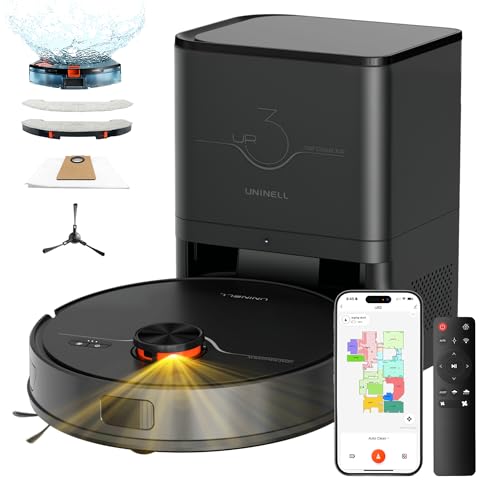
The uninell UR3 uses 5000Pa cyclone suction paired with laser-guided navigation for precise mapping. Its 180-minute runtime supports larger workshop cleaning sessions, and the 3-in-1 functionality sweeps, vacuums, and mops, allowing thorough cleanup of hard floors and carpeted areas. Notable features include auto-carpet boost, which increases suction on carpets, and a smart obstacle-avoidance system that helps protect furniture and equipment. The vacuum also supports No-Go zones, helping you tailor cleaning paths around fragile items or cables.
In workshop environments, the combination of powerful suction, intelligent mapping, and zone controls reduces downtime and manual repositioning. The UR3’s threshold climbing and cliff sensors help prevent falls or unintended drops, which is useful when cleaning near stairs or raised platforms. App-based controls and voice compatibility add convenience when hands are busy with tools or parts.
eufy C10: Self-Emptying and Smart Mapping

The eufy C10 combines a self-emptying station with advanced smart mapping and LiDAR navigation. Its 4,000 Pa suction handles common workshop dirt, dust, and crumbs, while the self-emptying feature reduces maintenance frequency by funneling debris into a 3L bag. The C10’s CornerRover arm helps clean corners and edges where dust tends to accumulate, which is valuable in shop spaces with wall-to-wall shelving and equipment corners. The combination of mapping accuracy, edge cleaning, and convenient emptying makes it a strong option for larger workshop areas where minimal intervention is desirable.
Consider how often you clean in one space and how often you upgrade filters or bags. The C10’s autonomous emptying reduces manual checks, but you’ll want to monitor the bag capacity and replacement schedule to maintain performance. The slim design also helps it reach under workbenches and behind equipment where dust collects but access is limited.
TRDIOL RV251: Self-Emptying and Custom Maps
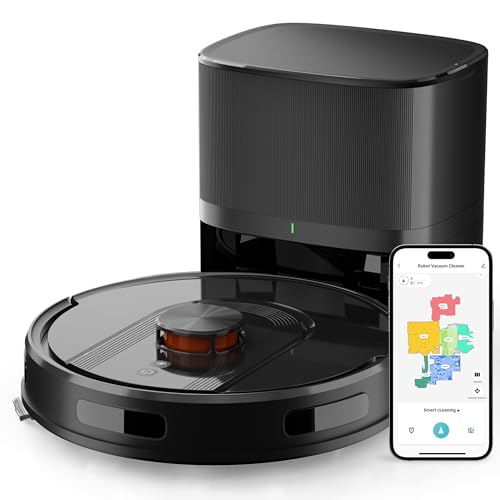
The TRDIOL RV251 emphasizes self-emptying and sophisticated mapping with no-go zones and customizable routes. Its 6000Pa suction provides powerful extraction of dirt and debris on hard floors and carpets, making it suitable for workshop environments with varied surfaces and heavier material. The device supports precise cleaning plans through its LiDAR navigation, enabling workers to designate zones and prioritize specific areas, such as workshop floors near machinery, tool benches, and storage corners. The combination of strong suction, LiDAR navigation, and a long-running battery supports extended clean sessions with minimal supervision.
Workshops often require flexible cleaning windows. The RV251’s No-Go Zones help avoid delicate equipment, while its long runtime and auto-recharge provide a reliable cleaning routine. The self-emptying feature reduces the frequency of manual bag changes, which is beneficial in busy shop settings where time is precious.
MONSGA MS1: High Capacity, Five Maps

The MONSGA MS1 features 5000Pa suction with LiDAR navigation for precise floor plans and methodical cleaning paths. Its 3-in-1 cleaning capability combines sweeping, vacuuming, and mopping with adjustable suction and water-flow settings, enabling tailored cleaning for different floor types. The vacuum supports up to five saved maps, which is helpful for multi-level workshop spaces or facilities with distinct zones. It also includes three levels of water flow for mopping, allowing finer control over moisture on hardwood or tile floors. This makes the MS1 well-suited for workshops with varied surfaces and a need for detailed floor maintenance.
For workshop use, the ability to define No-Go Zones and customize cleaning schedules enables a hands-free approach to keep floors clear from dust, grit, and spills. The compact design and strong suction help it clean under equipment and in tight spaces where dust tends to accumulate, while the multi-map capability simplifies operation in spaces with multiple floors or distinct work zones.
Buying Guide: Key Purchase Considerations
When choosing a workshop-oriented robot vacuum, consider the following factors to ensure you pick a model that fits your space and workflow:
- Suction Power and Mop Capability: Look for high suction (around 5000Pa or more) for pet hair and workshop debris, plus the ability to mop if spills are common. Some models offer 2-in-1 vacuum-and-mop operation, which can save time in larger spaces.
- Navigation and Mapping: LiDAR-based mapping provides precise floor plans and efficient cleaning paths. Multi-floor memory is valuable if your workshop spans multiple levels or rooms.
- Self-Emptying and Maintenance: Self-emptying stations reduce manual bag changes, especially in busy environments. Check dust capacity and compatibility with replacement bags or bins.
- Zone Control and No-Go Zones: The ability to block off areas such as workbenches, cables, or delicate equipment prevents mishaps and improves route efficiency.
- Runtime and Charging: Long battery life supports extended cleaning sessions. Automatic recharge ensures the vacuum is ready for the next cycle without manual intervention.
- Capacity and Size: Ensure the vacuum can access under furniture, around equipment, and narrow gaps typical in workshops. Slim designs can be advantageous here.
- Durability and Noise: Consider build quality and noise levels, especially if the vacuum operates while you’re working nearby.
- App and Voice Control: App integration and voice assistants can simplify operation when hands are busy with tools or parts.
- Maintenance and Availability of Accessories: Check filter, brush, and tank replacements, as well as availability of spare parts.
In practice, the best choice depends on your workshop size, floor variety, and how often you want to intervene. A model with strong suction, effective mapping, and self-emptying is typically the most hands-off option for busy spaces, while a lighter model may suit smaller areas with fewer obstructions. Consider creating a cleaning schedule that aligns with tool usage patterns to maximize efficiency and keep floors clear of debris and dust.