When selecting quick connect fittings for vacuum and pneumatic setups, the right components ensure a secure seal, reliable performance, and long service life. This guide highlights five top options that balance versatility, durability, and ease of use. Each product supports common tube sizes and pressures found in hobbyist workshops and professional environments, helping you choose fittings that reduce leaks and maintenance. Read on to compare key features and practical applications for each choice.
| Product | Tubes Supported | Material | Key Benefit |
|---|---|---|---|
| TAILONZ PNEUMATIC 40-Piece Kit | 1/4″ tubes | Plastic fittings | Extensive kit with multiple fittings |
| mxuteuk Quick Connect Kit (53Pcs) | 1/8″ to 1/2″ | Nickel-plated brass / plastic | Broad size range and secure locking |
| Beduan Push to Connect Fitting (12 Pack) | 4mm tube | Plastic / metal | Compact, straight union focus |
| XaXmTee 68 Pcs DOT Air Line Kit | 1/4″ and 3/8″ | Stainless steel / PBT | DOT-rated lines and robust fittings |
| XaXmTee 80 Pcs Quick Connect Kit | 1/8″ to 1/2″ | Stainless steel / PBT | Large assortment with storage box |
Note: The selections emphasize common quick connect systems used in vacuum and pneumatic work, including push-to-connect and quick-release styles. Each product name is linked to its Amazon listing for quick reference. Prices and availability are subject to change by the retailer.
TAILONZ PNEUMATIC 40-Piece Kit

The TAILONZ PNEUMATIC kit offers 40 push-to-connect fittings designed for 1/4″ tubes and air systems. The set includes elbows, tees, and straight connectors, enabling flexible circuit layouts for vacuum or pneumatic lines. Materials are described as plastic push-to-connect fittings suitable for air; they handle up to 145 psi and temperatures from 0 to 60°C. This kit is ideal for hobby projects, small shop setups, or as a starter collection when building or repairing pneumatic lines. The wide variety helps users replace worn connectors or assemble temporary test rigs without hunting for individual parts.
Considerations: Plastic fittings can be cost-effective and lightweight but may not withstand harsh industrial environments. Ensure compatibility with your tube type (PU/nylon/soft PE) and confirm your operating pressure aligns with the 0–145 psi range. When pairing with metal components, verify the seal method to minimize leaks in vacuum applications.
mxuteuk Quick Connect Kit (53Pcs)

mxuteuk’s 53-piece assortment covers 1/8″, 1/4″, 3/8″, and 1/2″ push-to-connect fittings. A circular release ring design simplifies installation and removal, while a 360-degree rotating bottle cap adds versatility for space-constrained installations. An internal locking clip enhances retention, reducing accidental disconnections. The kit combines nickel-plated brass with durable plastics, delivering corrosion resistance and aging resistance suitable for industrial and workshop environments. This makes it suitable for automotive, automation, and general pneumatic projects seeking a robust, modular approach.
Practical notes: The broad size range supports many fittings and hoses, but ensure you have the correct thread form for your equipment. Chemical compatibility is generally good for common air systems, yet always confirm the fluid and tube materials in contact with oils or lubricants used in your tools.
Beduan Push to Connect Fitting (12 Pack)

This Beduan set focuses on 4mm straight union connectors designed for 0–1.0 MPa (0–150 psi) operation and tube compatibility with PU, PA, PE, and PVC. The push-to-connect mechanism enables quick mounting and dismounting, making it a practical option for systems that require frequent reconfiguration or testing. It suits compact work areas where space is at a premium and minimizes downtime when re-plumbing lines for different tasks. It is compatible with air and vacuum lines commonly used in small workshops and DIY projects.
Usage tips: If you’re wiring a system that experiences temperature fluctuations, verify material tolerances and perform leak checks after assembly. While plastic components are common here, confirm they will resist the mechanical stresses of your application, especially if lines are flexed or moved regularly.
XaXmTee 68 Pcs DOT Air Line Kit

The XaXmTee 68-piece kit blends DOT-rated air lines with a broad set of push-to-connect fittings. The package includes two 50-foot rolls of 1/4″ and 3/8″ DOT air lines, plus multiple connectors, tees, elbows, and a tube cutter. Premium lines use polyamide 12 nylon for DOT compliance and robust performance, while the fittings feature stainless steel lock claws and PBT components for durability under pressure. This kit is well-suited for automotive or pneumatic workshop projects where DOT-compliant lines and rugged fittings are advantageous.
Considerations: DOT-rated lines add a level of compliance, but check compatibility with your vacuum equipment, since vacuum systems may operate differently from standard pneumatic setups. Storage organization is a plus in this kit, helping keep components accessible for ongoing projects.
XaXmTee 80 Pcs Quick Connect Kit
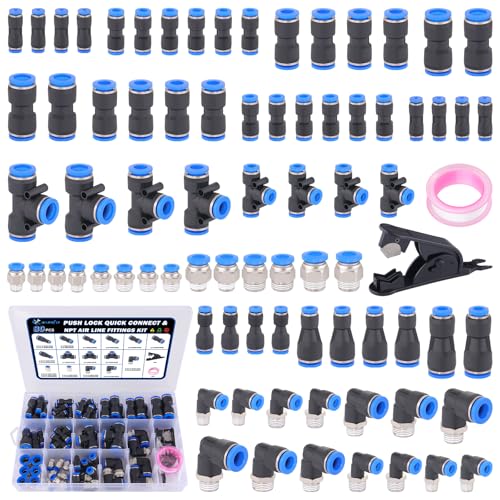
This XaXmTee kit expands to 80 pieces, offering 1/8″, 1/4″, 3/8″, and 1/2″ push-to-connect and NPT-threaded fittings. It includes a mix of straight unions, tees, and 90-degree elbows, plus a tube cutter and Teflon tape. The fittings are constructed from stainless steel and PBT, designed to withstand high pressures and temperatures with corrosion resistance and low permeability. A dedicated storage box helps keep all parts organized, which is beneficial for frequent reconfigurations or field work where quick changes are required.
Points to evaluate: The larger assortment is excellent for diverse tasks but requires careful inventory management to avoid mismatch. Confirm the threading standards and ensure your hoses and seals are compatible with stainless steel and PBT components over time, especially in environments with UV exposure or chemical exposure.
Buying Guide: Key Purchase Considerations And Comparisons
- Application compatibility: Match tube outer diameter (OD) and inner diameter with the fittings. Common sizes include 1/4″, 1/8″, 3/8″, and 1/2″ in both push-to-connect and quick-connect styles. For vacuum-specific tasks, verify seal integrity and leak resistance for low-pressure systems.
- Material and coating: Brass, stainless steel, and plastic each offer different durability and corrosion resistance. Brass and stainless steel tend to withstand harsher environments, while plastic can be lighter and cheaper for non-industrial use.
- Pressure and temperature ratings: Check operating pressure ranges (psi or MPa) and temperature limits. Prolonged exposure beyond specified ranges can degrade seals and fittings, increasing leak risk.
- Locking and retention: Some kits include locking clips or ring designs to prevent accidental disconnections. Consider whether secure retention is essential for your setup or if a quick-release approach suits your workflow better.
- DOT and regulatory considerations: If your work involves automotive or regulated environments, DOT-rated lines and components can simplify compliance. Ensure lines and fittings meet the required standards for your application.
- Organization and portability: Larger kits with storage boxes help streamline field work and workshop setups. Prioritize easy access to frequently used connectors and the ability to reconfigure lines quickly.
- Maintenance and replacements: Look for fittings with robust sealing technologies and compatibility with common tube materials (PU, PA, PE, PVC). Plan for replacement parts to avoid prolonged downtime.
- Cost vs. value: While comprehensive kits may carry a higher upfront cost, they reduce downtime and search time for parts during projects. Balance your budget with expected usage and project variety.
Selecting the best quick connect vacuum fittings depends on your specific use case, whether it’s a small workshop project, a professional pneumatic system, or test rigs for vacuum experiments. The five options highlighted here provide a spectrum of sizes, materials, and configurations to fit most standard needs while keeping maintenance and compatibility in mind. Always verify the compatibility with your tubing, hoses, and tools before purchase to ensure a reliable, leak-free system.