When tackling woodworking dust, a cyclone vacuum dust collector helps protect your vacuum, extend filter life, and keep your shop air cleaner. This guide compares top options from reputable brands, focusing on high separation efficiency, compatibility with common shop vacuums, and easy installation. Read on to find the right cyclone separator to reduce clogging and boost suction in your space.
| Product | Brand | Key Benefit |
|---|---|---|
| Mullet High-Speed Cyclone Dust Collector | Mullet | Parabolic design for faster airflow and better debris separation |
| DEWALT Dust Separator 10 Gal | DEWALT | High efficiency up to 99.5% with versatile port sizes |
| Dustopper PRO Low-Profile Dust Separator | Dustopper | Low-profile design with over 99% dust capture |
| DEWALT Dust Separator 6 Gal | DEWALT | Stable base with broad compatibility and easy emptying |
| Oneida Dust Deputy Low-Pro Plus | Oneida Air Systems | High flow, reduces clogs, fits standard buckets |
Each option below is analyzed for suction preservation, compatibility, and value for a typical home workshop or hobbyist setup. The products chosen here address common pain points such as filter clogging, reduced airflow, and the need for simple intallation with standard shop vacuums.
Mullet High-Speed Cyclone Dust Collector
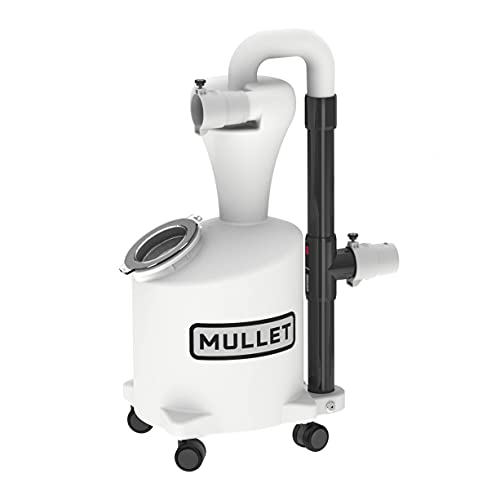
The Mullet cyclone unit emphasizes pre-separation, with a claim of removing over 99% of debris before it reaches the shop vac. Its parabolic design creates a faster airstream for stronger suction and more efficient debris capture, improving overall dust collection during woodworking or hobbyist projects. The system also offers a rigid PVC connection that aims to form a single, airtight interface, reducing the risk of leaks and keeping the vacuum’s filter cleaner for longer. This setup is designed to work with standard shop vacuums and dust extractors, helping minimize filter maintenance while maintaining strong airflow.
DEWALT Dust Separator 10 Gal

This DEWALT unit offers high efficiency, claiming to separate up to 99.5% of debris from the airstream and protect the fan blower from damage. It uses modern cyclone technology to reduce the need for frequent filter cleaning or replacement. The design is adaptable to various makes and models, with common port options to fit multiple hose sizes. A portable base helps with mobility, making it practical for larger shops or spaces where the unit needs to be relocated. The 10-gallon capacity provides extended collection before emptying.
Dustopper PRO Low-Profile Dust Separator

The Dustopper PRO is marketed as a low-profile separator designed to deliver high flow and extensive debris capture. It is compatible with most shop vacuums and tools using a standard 2-1/2″ hose. The system claims to capture more than 99.9% of typical shop dust, which helps protect vacuum filters and extend their life. Its compact form factor makes it a popular choice for tighter workshops or setups where space saving is important. The product emphasizes cost savings by reducing the need for frequent filter replacements.
DEWALT Dust Separator 6 Gal

This 6-gallon DEWALT model combines high efficiency with a stable base and easy mobility. It is designed to capture debris before it enters the vacuum, helping to reduce suction loss and extend filter life. It supports a range of materials including wood chips and drywall dust, and offers port options of 1-7/8″ or 2-1/2″ to match common shop vac hoses. The four-caster base improves maneuverability around the workshop, making it suitable for smaller spaces or frequent reconfiguration of the work area.
Dust Deputy Low-Pro Plus

The Dust Deputy Low-Pro Plus focuses on high flow and compatibility with standard 5-gallon buckets. It uses cyclone separation to keep debris out of the vacuum, thereby reducing filter clogs and enabling up to 50% more airflow than some lid-style separators. It is designed to be simple to integrate with most wet/dry vacuums and systems that use a 2.5″ hose. The low-profile design provides stability and easy placement in a workshop corner or under a bench, while protecting the vacuum and extending its service life.
Buying Guide
- Compatibility: Confirm the separator’s hose port size and its ability to connect to your existing vacuum or dust collector. Look for 1-7/8″ or 2-1/2″ options, which are common across many shop vacuums.
- Separation Efficiency: Higher claimed efficiency (99%–99.9%+) means more dust goes into the collection container rather than your vacuum’s filter. This generally reduces maintenance and extends filter life.
- Capacity and Filtration: Larger collection buckets reduce how often you must empty, but consider space constraints. Some units include integrated filtration or recommend additional canister filters for specific dust types.
- Stability and Mobility: A sturdy base and caster wheels help in small workshops. If space is tight, a low-profile model can be advantageous, but ensure it doesn’t block circulation or access to tools.
- Installation and Maintenance: Look for a clean, single-piece connection design to minimize leaks. Easy-to-remove buckets and lids simplify cleaning and maintenance routines.
- Materials Compatibility: Some dust separators are designed for dry dust only, while others tolerate wet/dry use. Check manufacturer guidance for compatibility with your typical dust types.
- Mobility vs. Stability: Portable units are convenient for moving between tools and locations; however, ensure they are stable during operation to avoid tipping hazards.
In practice, the best choice depends on your space, the types of dust generated, and your existing vacuum setup. If you frequently move between tools or you need high throughput, a low-profile separator with universal port compatibility may be ideal. For larger workshops with more permanent stations, a wheeled or heavier-duty unit that minimizes clogging and maintains airflow can deliver consistent performance over time.