Choosing an adjustable vacuum switch can improve tool safety, efficiency, and dust control in workshops and garages. This article highlights five reliable options that offer adjustable triggering points or delay features, helping you tailor performance to your setup. Each product is evaluated on adjustability, installation, and durability to support informed decisions for American users.
| Product | |||
|---|---|---|---|
| Superior (K058) Universal Adjustable Vacuum Switch Kit | Transparts Warehouse | Adjustable trigger point; auto part kit | General automotive and vacuum control |
| Vacuum Switch Kit | Transmaxx | 6–22 inHg adjustable; normally open/closed wiring | Lock-up control for transmissions and vac systems |
| Automatic Vacuum Switch, Ortis Dust Control Autoswitch | Ortis | Configurable actuation thresholds; three run modes; delay options | Power tools and dust collection systems |
| 2L inc., Adjustable Vacuum Pressure Switch | 2L inc. | 10–32 vacuum port; 10.1A; adjustable with thumbscrew | Vacuum or pressure control in diverse setups |
| TAICHODEER Upgraded Automatic Vacuum Switch | TAICHODEER | 3/7/10s delay; 30/60/100W thresholds; two tool outlets | Shop vacs and power tool integration |
Note: Each product is selected for adjustability and practical utility in typical American workshops and garages. Availability and exact specifications may vary by vendor and model year.
Superior (K058) Universal Adjustable Vacuum Switch Kit

The Superior K058 kit is designed as a universal adjustable vacuum switch for automotive use. It is marketed as an auto part with a compact package size of 2.4 cm L x 12.2 cm W x 12.8 cm H, offered as a single-item package. The kit emphasizes straightforward replacement and adjustable vacuum triggering, enabling users to tailor the switch to their vacuum-operated systems. Installation considerations include verifying compatibility with existing vacuum lines and ensuring proper electrical wiring according to vehicle or tool specifications. This option suits hobbyists and professionals seeking a versatile, adjustable switch in a compact form factor.
Vacuum Switch Kit

Transmaxx’s Vacuum Switch Kit provides adjustable triggering suitable for transmissions and other vacuum systems not reliant on computer control. It highlights an adjustable trigger point between 6 and 22 inches of vacuum and supports both normally open and normally closed configurations. The product appears focused on compatibility with older GM-style vacuum logic and similar setups, enabling precise timing for lock-up or disengagement. Prospective buyers should confirm compatibility with their vehicle’s vacuum system and ensure correct wiring for the chosen configuration.
Automatic Vacuum Switch, Ortis Dust Control Autoswitch
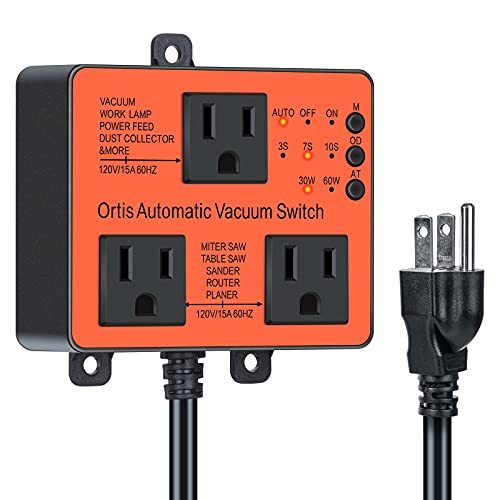
The Ortis Autoswitch combines dust control with automatic vacuum operation for power tools. Its new-generation design includes two tool outlets, three run modes (Auto, Off, On), and clear LED indicators for each mode. A configurable actuation threshold (30W/60W) lets users tailor the switch to actual tool loads. A built-in auto-delay feature (3s/7s/10s) helps maintain airflow after tool shutdown, reducing debris dispersion. Installation options include screw mounting or adhesive mounting for quick setup, making it a flexible choice for workshops seeking integrated tool and vacuum management.
2L inc., Adjustable Vacuum Pressure Switch

2L inc. offers an adjustable vacuum pressure switch with both normally open and normally closed quick-connect terminals. The switch is designed for easy adjustment via a thumbscrew and features a 10-32 vacuum port for compatibility with a wide range of hoses and adapters. This unit is well-suited for users who require quick tuning of trigger points in vacuum systems, including dust collection, pneumatic tools, and laboratory setups. As with all adjustable switches, verify electrical ratings and ensure safe installation with appropriate insulation and wiring practices.
TAICHODEER Upgraded Automatic Vacuum Switch

The TAICHODEER switch focuses on smarter shop vac and dust-collection control. It features two tool outlets and a configurable delay for after-tool operation (3/7/10 seconds) coupled with a configurable power threshold (30W/60W/100W). This setup ensures the dust extractor runs only when needed, helping to reduce noise and energy use while maintaining effective debris removal. The device emphasizes compatibility with common woodworking tools and offers straightforward setup for users seeking a cohesive dust-collection workflow in their shop.
Buying Guide: Key Purchase Considerations
- Adjustability range: Look for switches with clearly labeled trigger thresholds (inHg or watts) that match your equipment’s operating conditions. Wider ranges provide more flexibility across tools and projects.
- Wiring configuration: Decide between normally open or normally closed wiring and confirm compatibility with your system’s electrical setup. Some models also support dual tool outlets for convenience.
- Delay and auto-off features: Delays help clear residual debris and prevent short cycling. Consider whether you need short (a few seconds) or longer (up to 10 seconds) delays for your application.
- Installation options: Mounting methods (screws, adhesive, or both) affect ease of installation. Tools and workshop layout may benefit from flexible mounting choices.
- Power and load ratings: Check current and wattage ratings to ensure the switch can handle your tools and vacuum system without overheating or nuisance tripping.
- Durability and materials: Metal housings and corrosion-resistant components improve longevity in dusty or oily environments common to workshops.
- Compatibility with older and newer systems: Some adjustable switches are designed for classic vacuum setups, while others support modern, computer-controlled tools. Verify compatibility with your equipment model and era.
- Safety considerations: Ensure appropriate insulation, secure wiring, and proper enclosure where needed to prevent shock or short circuits in busy workshop environments.
- Maintenance and replacement parts: Look for switches with readily available replacement cables, connectors, and seals to minimize downtime.
When comparing options, consider how each device handles trigger accuracy, ease of installation, and how well the product integrates with existing tools and dust-control systems. For users prioritizing ease of use and integrated dust management, models with built-in delay and multiple tool outlets offer practical advantages. For automotive or industrial applications, a robust, adjustable vacuum switch with clear wiring configurations provides reliable long-term performance. Always consult product manuals and safety data to ensure a correct fit for your workshop setup.